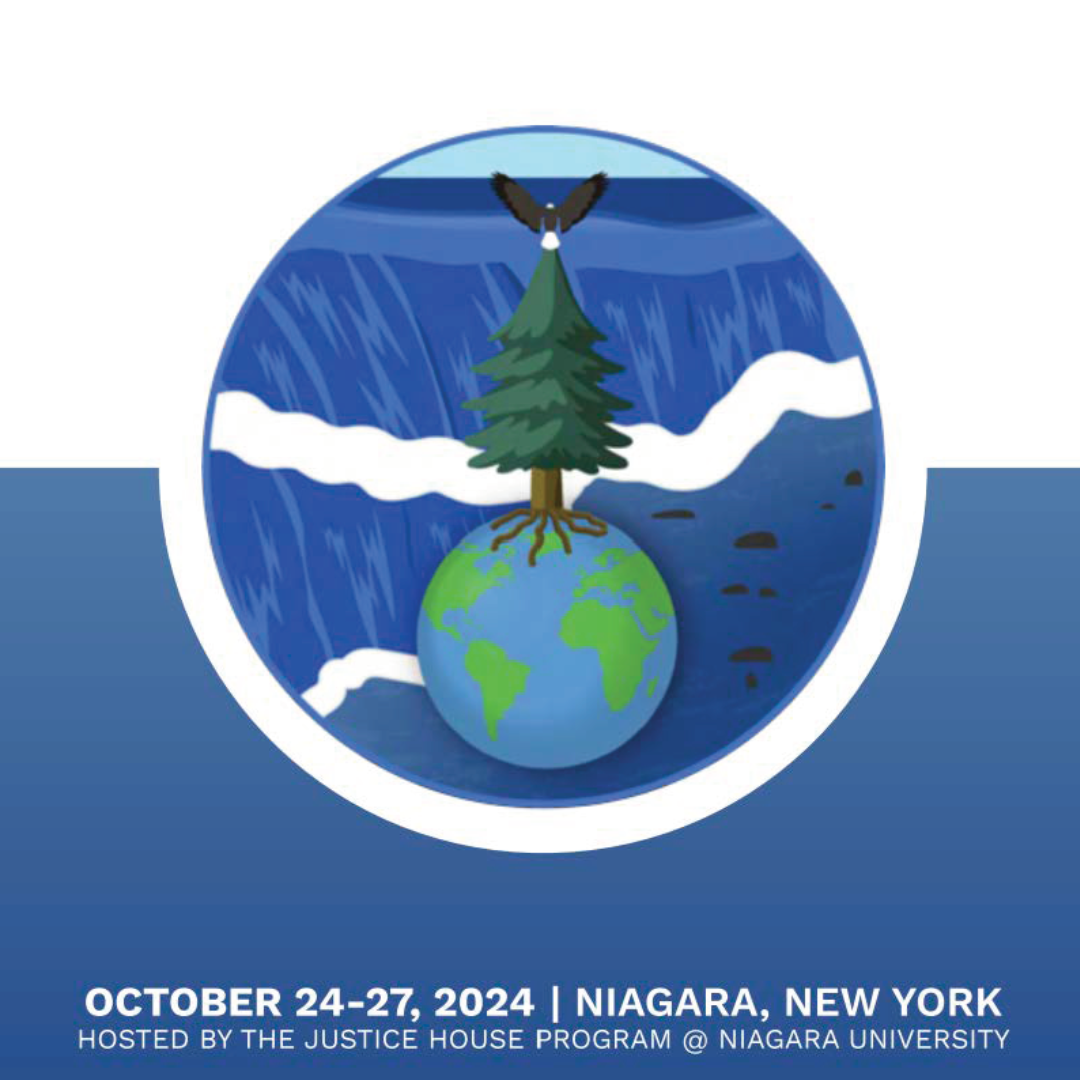
In October 2024, I attended the Peace and Justice Studies conference in Niagara Falls, NY. I was there to present my research, entitled “Peacemakers at the Intersections of Power: Critically Examining Restorative Justice Facilitators and Practices to Navigate Differing Levels of Power and Social Identity in Dialogue,” which I had developed from the initial findings and data from my dissertation. While at the conference, I was able to interact with a number of peace and justice studies scholars as well as practitioners. For instance, my fellow panelists were people such as Noman Sajjad who created dialoguing programs in Pakistan amidst ethnic and religious conflict. Or Lee A. Smithey, Harrison Kim, and Grant Himes, panelists who shared their research tracking murals of/during the Troubles across Northern Ireland and the impact of visual art on the youth growing up in those areas. It was an incredibly intellectually stimulating and motivating environment to be around so many people who care deeply about peacemaking, and using different strategies and practices to accomplish peacemaking efforts around the world. It was also really interesting to see the intersection between academia and practitioners and their collaboration to make social change.
The city in which the conference took place was also indicative of what it takes to pursue peace and justice in our society. During the conference, we had the opportunity to visit the Underground Railroad Heritage Center in Niagara Falls. I learned about the history of Niagara Falls as the “final stop“ on the underground railroad before enslaved black Americans escaped into Canada. I learned the names of freed Black Americans, such as James Patterson and John Morrison who created a clandestine and elaborate network through the Cataract House to help guide enslaved Black Americans such as Cecilia Reynolds and Nancy Berry to freedom by crossing the Niagara River. What is truly remarkable about the city is that from any advantage point you can see Canada. All that separates the countries from this site is a body of water and all that separated folks from freedom was a small boat ride. So those who helped others cross into Canada were remarkable not only because they risked their own lives to do so, but also remained in the US when Canada was right there and they could just go into it and be free themselves. Granted the people who are helping others get to Canada were already freed, but I think it speaks to their sacrifice and their commitment to peace and justice.
I took a tour of Niagara Falls and got so close to the falls that I could barely see through my glasses because the mist from the water completely obscured my vision. It was incredible to see all of the efforts dedicated to preserving the falls, including creating electric boats and ferries. But the tour took on a whole new meaning when I realized that the body of water I casually enjoyed experiencing as one of the great natural wonders of the world was also a site on which many saw as their chance to be free. It really transformed this geographical site and caused me to think and reflect closely and deeply on the distance between captivity and freedom, and how socially constructed borders serve to define freedom, and how bodies of water carry great meaning to Black history on what it means to cross into freedom.
It made me think a lot about my own work and peacemaking efforts through restorative justice and how dialogue is sometimes the distance between hatred and harm and understanding and eventual collective liberation. It also made me think deeply about how physical environments and geographical settings hold great meaning which could also be translated into the physical dialoguing space and how we can bring that embodiment into our own reflections. For my pedagogy, it inspired me to also create more opportunities for students to go to physical sites of harm and healing to practice more embodied connections with the world around us rather than passive consumption from within a classroom. Ultimately, this trip was incredibly eyeopening and filled my bucket in very unexpected ways and I was grateful for both the people I interacted with and the environment I was able to learn from.